Wednesday, May 13, 2009

Shilian Dashan's Self-Portraits (1/33)

Shilian Dashan's 33 Self-Portraits

I'm hoping to teach students in my course about Shilian Dashan, who rose from selling paintings on the street to master of an empire of Chan monasteries with powerful allies and mission contacts in Guangdong, Macao, Vietnam and Japan. His 30-year career, 1770s-1800s, ended when he was tried for a long list of crimes including smuggling, theft and anti-government stuff.

Shilian wrote a long memoir of his big trip to Vietnam, but Professor Wu Pei-yi seems more interested in the 36 self-portraits included in the monk's collected poetry volumes. I was excited to find copies of these portraits in two different modern editions, but I can't make out the text in the corners of these -- I'll be trying to though, and asking my classmates for help on this.


Dispatching the Demon 遣魔圖
Wu Pei-yi, The Confucian's Progress, p. 200
Read more...

A Course is Born


Morning moodling...
Read more...

Tuesday, May 12, 2009

Snapshot: Legendary Emperor Ge Tian 葛天氏

Looks Greek to Me: Ge Tian 葛天 of Changge, Henan Province

Wendy Larson's identification tag (I feel she must work much like I do):


Read more...

Monday, May 11, 2009

Zhao Chapter 5 Overview

Zhao Baisheng, A Theory of Auto/biography

Chapter 5, Section 1: Three basic tropes of the "new biography"

Professor Zhao makes reads here from representatives of what he calls the "new biography," following Virginia Woolf's term. Lytton Strachey appears here, and also Emile Ludwig, Gamaliel Bradford, Philip Guedalla, and André Maurois. Zhao's purpose is to identify the three most crucial tropes of these writers' biographies that makes their work a viable genre. His point is that biographical literature has always been an important form of Western (read: English) literature, but after the "wave" of new biographies in the 1920s and 1930s, biography could be said to be a crucial literary form; something similar is true in the Chinese case.

The three tropes (called here "broad axes" 板斧, an extremely popular and versatile usage that worries one with its vagueness) that Zhao identifies are: the primacy of artistic technique (藝術第一), the need to explain (務必解釋), and a premium placed on "human interest" ("心的趣味").

1. Rather than discussing the primacy of artistic technique in general, Zhao moves quickly to the issue of whether a biography can be considered a "portrait" and the language of painting thus be applied to describe technique. A rather ambivalent consideration of Andre Maurois' biography of Disraeli finds that Maurois close attention to the Punch cartoons lampooning Disraeli definitely make his work more attractive to readers, and perhaps do not harm their "accuracy" as historical accounts. Unfortunately, this is not discussed with any amount of detail.

2. As my longer notes attempting to unpack this section suggest, this is the trope that interests me most deeply. That virtually all of the 1920s-30s biographies of major artists and political figures apply techniques of binary comparison (Lee will have his Grant, Disraeli his Gladstone) strikes me as a very real insight of Zhao's, though perhaps not completely generalizable (Napoleon surely was not compared to Wellington throughout Ludwig's biography, yes?). I suspect that a biographical subject's personality is staged, more often than not, by showing how she is different. She is discriminating, distinguished, different. I also suspect that Professor Zhao's connection between comparison and Foucault's "effective history" is a solid connection, but once again Professor Zhao simply does not elaborate on this at any level of detail at all.

3. Gamaliel Bradford's Biography and the Human Heart (1932) exemplifies Zhao's sense that in the world of the new biography, historical background is not as important as psychological analysis to craft the personality of the biographical subject. It's unclear why Zhao chose Bradford: Bradford's belief in the essential unchanging basic nature of the soul, and his conception of his role as a "naturalist of souls" are troublesome -- even Zhao admits the static model of personality found here jars with with the other new biographers. Zhao is likely relying heavily on Mark Longaker, whose 1934 work may well have been the last to take Gamaliel Bradford seriously. (Who are some better representatives to illustrate psychological tropes in biographical literature?).
Read more...

Sunday, May 10, 2009

Autumn Meditations 1/8

"But these poems aren't the easiest to understand. Certainly they use
many allusions, but even more difficult is the poet's declaration of
his life's ambitions, which lends "Autumn Meditations" a deeply
autobiographical dimension that is distinct from other "songs of my
cares" poems, or "exile during the war" poems." 但是這組詩不太好懂,不僅因為用了許多典故,更是因為詩人陳述一生心事,使得《秋興》充滿自傳色彩,不同於其他的詠懷古跡之作或是描述戰亂流離的敘事詩。 -- Northbridge, March 2009


Zhang Chungui 張純桂, Illustrating Autumn Meditations, 1/8


White fall frost burns into the red maple groves,
Wu Mountain, Wu Gorge: a dark, mist-whistled forest.
Frost meets mist, surging to the skies over the Yang-tze.
Heavy clouds over the fortress dance with the shadows below.


Twice now, chrysanthemum tears bloomed in the fall,
a cry for better times,
Oh lonely boat, tethered fast to the gardens of your old home --
Listen...they're getting out the scissors,
they're measuring out the coats,
They're pounding soft the stiff fabric for the coats,
in the old fortress,
in the dusk,
chock chock chock.
Read more...

Snapshot: General Du Yu

General Du Yu 大將軍杜預 (one of Du Fu's 杜甫 ancestors)

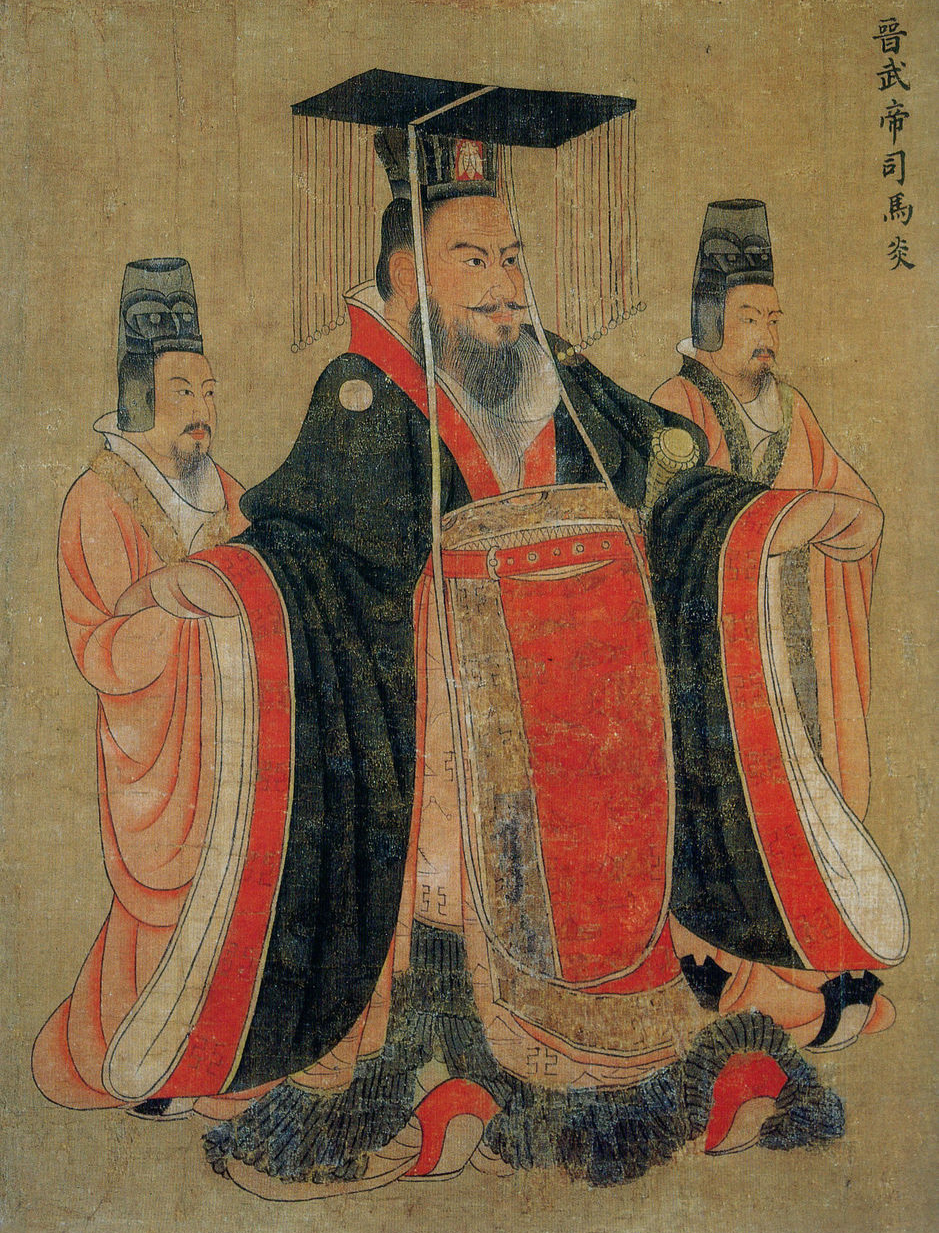
Since many of Sima Yan's generals advised against an attack on Wu in 280, Sima hesitated. Eastern Wu seemed strong, led by able and ferocious leaders, and treacherous to approach via the Yang-tze. But General Du Yu persuaded Sima Yan that an attack could be successful. He had a very different estimate of Wu's strength: They will "fall apart like cracked bamboo" 勢如破竹, he said.
Read more...

Snapshot: Sima Yan, aka Emperor Wu of the Jin


Sima Yan, conqueror of the Cao clan (晉滅吳之戰), enjoyer of 10,000 concubines.
Read more...

Friday, May 8, 2009

Analytical Reading: The Need to Explain

Analytical Reading

Zhao, A Theory of Auto/biography

Chapter 5, section 1. Three basic tropes of the New Biography,Trope 2:

The Need to Explain 務必解釋.

Not just to explain, but to make your audience see things differently. Strachey, for example, was an iconoclast who wants us to see that so-called great figures of the Victorian age were actually depraved by their religious superstition. He pushes for detailed explanations of this depravity 野心; Florence Nightingale, for example, is consumed by [her own?] demons 惡魔繩身 [is this a psychological explanation? At times like this, Zhao's idiomatic language is a little too pat -- too terse].

Ludwig may not be quite as iconoclast, but he's even more meticulous 縝密 about explaining. Why was Napoleon successful in invading Italy, for example? His age, his army, his appeal to Italians for values like "freedom." He waged two wars: one with the gun, one with the pen. [Does Prof. Zhao realize this explanation is likely to be completely outdated?]

Napoleon was a very active man, and he was also a master of language. Speech at Milan. You are the suns of Great and Good men of the Past. This explanation is a creation of Ludwig. [I take it Zhao is emphasizing the 'constructedness' of the biographical subject at hand here. He goes on to reflect on a basic technique used in biographical explanation: comparison of the biographical subject with his actualizing other.

First he characterizes Strachey and Ludwig in comparison: Strachey is straight and direct where Ludwig is meandering. Yet, both were good at explaining via binary comparison 二元對立 [Zhao is himself applying just such binary comparison to begin this discussion. Is that a conscious testament to the validity, or just basic existence, of this form of argument?

Ludwig compared Goethe and Schiller; Bradford, Lee and Grant. This sort of nemesis comparison reaches its extreme in Maurois, who pitched Disraeli against Gladstone, called Inferno and Paradiso, respectively in Disraeli.
趙白生
Strachey
Ludwig
Ludwig
Bradford
Maurois

In a particularly fantastic passage, Prof. Zhao summarizes his conception of biographical technique that connects the artistry of comparison with the need to explain: it asks scholars to find hidden gold, and instructs in how to make the gold. "Art captures the ever-elusive Explanation," says Strachey. This is an example of Foucault's "effective history" 有效史. "Effective history (i.e. an approach to history in which there is consciousness of the myriad effects that history has) uproots the traditional foundations of the self." Stop! That's a quote from some other student's notes, but I can make sense of it here if I imagine Ludwig's, Bradford's, Maurois's, and Strachey's concept of historical truth. Why, for example, did Napoleon succeed in Italy? He would not have if he were not a good speech writer, for one thing. This shows the effect of being good with words. How is that an uprooting of the traditional foundations of the self? I suppose because it highlights not only a man's character but also a man's circumstances as the main factor determining whether he win a war or become a more famous poet. If indeed the machinations of other men are to blame, or if Italian's were simply ripe for democratic rhetoric, then what to say of Napoleon's self, except that he adapted to circumstance well? Rather than say that Napoleon won, we end up feeling that Napoleon played a good game, and the stakes were in his favor.

No matter how much we study a famous political figure, or artist, we still don't know whether his original, deepest character is good or bad. In fact, come to think of it, it is most likely neither good nor bad, but something of the character of a machine, one that wins, and then loses, perhaps to win again. Analysis of the technique of autobiography reveals just how constructed the explanations are. We step out of the suspended disbelief of the nonfiction, and read it as fiction. The virtual world with complete sensory perception becomes a sequence of static images again, not even a moving film. Slowed down, it is more like manga, comics, multiple portraits with some dialogue drawn in. One panel follows after another. There is a plot there, but it is not the true history, just the story the storytellers tell, and we are the story tellers.

is properly under “dissociative, directed against identity” (93) corresponding to specific attitudes and interests. genealogy: The goal is not to trace the evolution of a concept, but to "isolate the different scenes where they engage in different roles" (76). They make the gold they want. 風骨存也 -- Liu Xie. [THat's an issue to take seriously!]
Read more...

Thursday, May 7, 2009

Snapshot of the Academy: Han Zhaoqi 韩兆琦


If memory serves (and it may well not), this is the guy that Professors Wu Pei-yi and Wendy Larson credit with pointing out the novel-like craftsmanship of Sima Qian's biographies [Update: nope, I was wrong about Larson, she credits the evidently similar scholarship of Li Changzhi and Zhou Hulin. More to come). Prof. Zhao quotes at length on this crafting with the goal of conveying the personality of the biographical subject. (Zhao uses his A History of Chinese Biography 《中国传记文学 史》)

Professor Han (looking far younger than his 70+ years, btw) can be seen here giving a 30-minute lecture on Sima Qian's biography of the first Han emperor.

It's interesting to me that Professor Han is so devoted to a single (albeit enormous) text -- this really shows the great status that Sima Qian retains in contemporary culture. Dubbed the Expert on Sima Qian's Historical Records (“中国《史记》研究大家”), Han's works include:

Notes on the Historical Records《史记笺证》
Essays on the Historical Records《史记通论》
Selected Criticism on the Historical Records《史记题评》
Essays on Commentaries to the Historical Records《史记选注集说》
A Glossary to the Commentaries to the Historical Records《史记选注汇评》
Critical Essays on the Historical Records《史记评议赏析》
The World of the Historical Records《史记博议》
The Historical Records: An Annotated Reader 《史记新译读本》

Cool, huh? For my purposes though, it will perhaps be more important to consult his History of Chinese Biography, The Art of Chinese Biography
《中国传记艺术》, and 《汉代散文史》History of the Essay in the Han Dynasty.
Read more...

Biography Theory at a Glance (8/9)

Cockshut, A. O. J. Truth to Life; the Art of Biography in the Nineteenth Century. London, Collins, 1974.

Reviewed with great esteem by somebody named JMS Tomkins. The issue of a psychological truth comes up, which is an intriguing indicatino of the depth of Cockshut's consideration.

No assumption is left lying unexamined; it is matched against facts and questioned as to its logical consequences. Defending Southey's emblematic interpretation of the providential deliverance from the fire of John Wesley in his childhood, against the modern expectation that the incident will be accepted as formative of his mind, he points out the grave intellectual difficulties that such an acceptance brings in its train.

The lesson: never turn away from intellectual difficulty. Anon!

Southey's biography of John Wesley is available for free download from Google Books; the anecdote in question is from near the beginning of the book.


Saved from the Flames

John, his second son, the founder of the Methodists, was born at Epworth on the 17th of June 1703. Epworth is a market-town in the Lindsay division of Lincolnshire, irregularly built, and containing at that time in its parish about two thousand persons. The inhabitants are chiefly employed in the culture and preparation of hemp and flax, in spinning these articles, and in the manufactory of sacking and bagging. Mr. Wesley found his parishioners in a profligate state; and the zeal with which he discharged his duty in admonishing them of their sins, excited a spirit of diabolical hatred in those whom it failed to reclaim. Some of these wretches twice attempted to set his house on fire, without success: they succeeded in a third attempt. At midnight some pieces of burning wood fell from the roof upon the bed in which one of the children lay, and burnt her feet. Before she could give the alarm, Mr. Wesley was roused by a cry of fire from the street: little imagining that it was in his own house, he opened the door, and found it full of smoke, and that the roof was already burnt through. His wife being ill at the time, slept apart from him, and in a separate room. Bidding her and the two eldest girls rise and shift for their lives, he burst open the nursery door, where the maid was sleeping with five children. She snatched up the youngest, and bade the others follow her; the three elder did so, but John, who was then six years old, was not awakened by all this, and in the alarm and confusion he was forgotten. By the time they reached the hall, the flames had spread every where around them, and Mr. Wesley then found that the keys of the house-door were above stairs. He ran and recovered them, a minute before the stair-case took fire. When the door was opened, a strong north-east wind drove in the flames with such violence from the side of the house, that it was impossible to stand against them. Some of the children got through the windows, and others through a little door into the garden. Mrs. Wesley could not reach the garden door, and^ was not in a condition to climb to the windows : after three times attempting to face the flames, and shrinking as often from their force, she besought Christ to preserve her, if it was his will, from that dreadful death : she then, to use her own expression, waded through the fire, and escaped into the street naked as she was, with some slight scorching of the hands and face. At this time John, who had not been remembered till that moment, was heard crying in the nursery. The father ran to the stairs, but they were so nearly consumed, that they could not bear his weight, and being utterly in despair, he fell upon his knees in the hall, and in agony commended the soul of the child to God. John had been awakened by the light, and thinking it was day, called to the maid to take him up ; but as no one answered, he opened the curtains, and saw streaks of fire upon the top of the room. He ran to the door, and finding it impossible to escape that way, climbed upon a chest which stood near the window, and he was then seen from the yard. There was no time for procuring a ladder, but it was happily a low house: one man was hoisted upon the shoulders of another, and could then reach the window, so as to take him out: a moment later and it would have been too late : the whole roof fell in, and had it not fallen inward, they must all have been crushed together. When the child was carried out to the house where his parents were, the father cried out, " Come, neighbours, let us kneel down: let us give thanks to God ! he has given me all my eight children : let the house go, I am rich enough." John Wesley remembered this providential deliverance through life with the deepest gratitude. In reference to it he had a house in flames engraved as an emblem under one of his portraits, with these words for the motto, '' Is not this a brand plucked out of the burning ?"

Read more...

Biography Theory at a Glance (7/9)

Kendall, Paul Murray. The Art of Biography. New York, Norton, 1965.

Stephen Shapiro says the baseball player can't always coach; he has no taste for Kendall's model of biography as "simulation." "Clifford's pluralistic approach is much more sensible and sound than Kendalls prescriptive one." Another fun, instructive negative review.

Murray is best known for his biography of Richard III -- hence the baseball player analogy.

Read more...

Analytical Reading: Biographical Fact

Zhao Baisheng, A Theory of Auto/biography

Chapter 1, Section 1 Biographical Fact 傳記事實

Biographical facts are all the elements within anecdotes that reveal something of the personality of the biographical subject, affirms Professor Zhao. For Plutarch and Sima Qian alike, biography is a craft of carefully chosen anecdotes. Alcibiades bites a man and says he is no woman, but a lion: the lion is memorable because it is a good figure by which to receive the general character of Alcibiades. Alcibiades has a beautiful dog, and one day he cuts off its tail. Again, the dog has the ability to sub-in for Alcibiades.

The main point here is that biography is not simply a large accumulation of materials, distinguished only by their veracity. Liang Qichao thought this was so, but as we can see in his biographies of Confucius and Guan Zhong, there is no personality there, because he did not craft one. Personality was not at the center of his attention, as it should have been. But what exactly is a "personality"? This remains a slippery term for Prof. Zhao. Also of concern: what sorts of personalities are most worth preserving? Does Zhao relate at all to Prof. Thayer's concern that "mokes" might be as interesting as heroes? I like the case of Alcibiades, because it indicates that this might be so.

"He was once hard pressed in wrestling, and to save himself from getting a fall, set his teeth in his opponent's arms, where they clutched him, and was like to have bitten through them. His adversary, letting go his hold, cried: "You bite, Alcibiades, as women do!"

"Not I," said Alcibiades, "but as lions do."
Read more...

Wednesday, May 6, 2009

Biography Theory at a Glance (6/9)


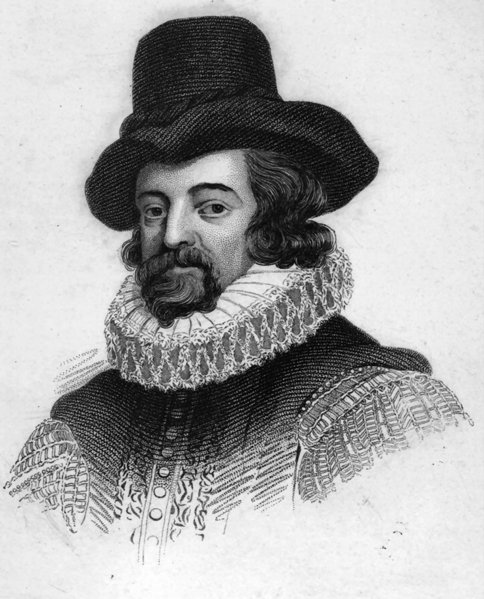
Apparently Bacon was afraid he'd lose himself

Clifford, James L.. Biography as an Art; Selected Criticism, 1560-1960. New York, Oxford University Press, 1962.

An anthology of crucial importance; no wonder Prof. Zhao mentions it again and again. Reviewer S.C. Roberts: "His collection ranges from Bacon and Fuller and other seventeenth-century writers through the two following centuries to a veritable galaxy of contemporary critics; and his wide reading is further demonstrated by a selective, but lengthy, list of modern books and essays which contain relevant critical matter."
Read more...

Biography Theory at a Glance (5/9)

Longaker, John Mark. Contemporary Biography. Philadelphia: University of Pennsylvania Press, 1934.

In a fun, short negative review, Howard Mumford Jones calls this "pleasant, though greatly over-written." Jones wants stronger criticism of bad biographers (like Emile Ludwig), and deeper consideration of the many issues of form, like "Guedalla 's bright style, Strachey's insight and compression, Bradford 's unitarian sketch, and so on."
Philip Guedalla by Anastas Botzaritch Sava (at Bailliol College, Oxford)
Read more...

Biography Theory at a Glance (4/9)

Portrait of the French Artist As British Scholar

Maurois, André. Aspects of Biography. New York, Ungar, 1966 [1929].

Statement from the French WWI vet turned anglophile and popular lecturer in the English-speaking world. He wrote biographies of Disraeli, Byron, Shelley, and many others, including some for children; his Call No Man Happy: An Autobiography dates from 1944. Quotable: "Memory is a great artist. For every man and for every woman it makes the recollection of his or her life a work of art and an unfaithful record."
Read more...

Biography Theory at a Glance (3/9)


Nicolson, Harold. The Development of English Biography. London, L. & Virginia Woolf, 1927.

Nicolson dwells on the need for a good biography to exhibit a "creative mind," yet refrain from projecting the substance of that mind onto the biographical subject. Inasmuch as he aims for a perfect application of scientific method to produce biography, perhaps he is not successful; yet, we have here historic readings of Boswell, Lockhart (Walter Scott's son-in-law), Froude (biographer of Thomas Carlyle; juicy controversy here), Sir Edmond Gosse's Father and Son, and Lyton Strachey's Queen Victoria. (Thanks to Ford K. Brown's review, MLN 1929)

Apparently Nicholson was a biographer, a CIA operative with expertise in Balkan affairs, and Vita-Sackville West's partner in a marriage of convenience. Fun!
Read more...

Biography Theory at a Glance (2/9)

Cross, Wilbur Lucius (1862-1948). An Outline of Biography: From Plutarch to Strachey. New York: H. Holt and Co., 1924.

At sixty pages, not so much a book as a "little essay," "first given as an address at Columbia university in the summer of 1921."


"Uncle Toby" : Yale Professor and Governor of Connecticut
Read more...

Biography Theory at a Glance (1/9)

Thayer, William Roscoe. The Art of Biography. New York, Charles Scribner's Sons, 1920.

An elegant argument in three parts: biography in antiquity, the break in between "medieval" and "modern" biography, and finally biography in the nineteenth century, with a list of recommended titles. Urging as much as possible to understand the lives of people of other races and times via biography -- though more than occasionally exhibits an elitism that is as refreshing as it is humorous. "Providence has ordered it so that, although we are all made of the same stuff, that stuff
has innumerable varieties, and, humanly speaking, those varieties are not equal in interest, in charm, or in beauty or significance."

Thayer was a Harvard man and a biographer of Teddy Roosevelt (see it on Bartleby.com), John Jay, and George Washington.

Read more...

Biography Theory: A Snapshot

The Art of Autobiography in 19th and 20th Century England, by A.O.J. Cockshut (Yale, 1985)

Just one of many secondary works that Prof. Zhao relies on; Cockshut is also known for a biography of Anthony Trollope.

The "Sighing Bridge" at Hertford College, Oxford. (Whence Cockshut Comes)

Anatole Broyard, reviewing the work in the New York Times, comments,

In his comments on the works he discusses he implicitly gives us his vision of how a good life should be led; this results in a witty and elegant view of moral philosophy by a man steeped in literature. He can say, for example, of H. G. Wells, that ''he mistook the invigorating and at times amusing process of stripping off the hypocrisies of conventional late Victorian Bromley for a profound inquiry into the nature of the universe.''

He also has this comment; one wonders if it does not apply to Professor Zhao as well, given the strict outlines of his theory:

'It is a privilege of a great autobiography,'' Mr. Cockshut says, ''to give us data for disagreeing with its conclusions.'' This may also be said of one aspect of his own book. Though he divides it into chapters with titles like ''Defined by the World,'' ''The Quest'' and ''Conversion,'' he does not pursue these categories with any great determination, and the book is better for it. Everything interests him; his mind is too curious to be confined by such a plan.

Read more...

Snapshot of Qing Thought: Tongcheng School

Tongcheng School: Short List

Fang Bao 方苞 (1668-1749) One of three main founders of the school. He seems to have been a born teacher, as his anthology and his key concept, yifa 義法, suggest. He went to prison in 1711 as a result of a literary inquisition against Dai Mingshi 戴名世, who was his friend.

Dai Mingshi 戴名世 (1654-1713) Ming Loyalist executed for anti-Manchu writings; he was also a visionary thinker who wanted to develop the craft of the essay as a tool for knowledge production. See Literati Identity and its Fictional Representations in Late Iimperial China, pp. 56, 264. See Rulin waishi chapter 35 for a literary suppression episode.

Xu Zongliang 徐宗亮 (1828-1904) (not shown in the pic; to be continued) Xu was a historian of Manchuria and author of a revisionist biography of Dai Mingshi. After serving as a secretary to Li Hongzhang and two other big figures, he was sent to Heilongjiang to inspect the border and spy on Russia. His historical examination of the area predicted Tsarist Russia's loss of territory to Japan.
Read more...

Snapshots from Below

Young-tsu Wong 汪榮祖 is best-known in the English-speaking world for A Paradise Lost: The Imperial Garden Yuanming Yuan.
Workin' It in Taiwan

He's also the author of The Compleat Historiographer 史傳通說(中西史學之比較) a 'work modeled on the historiographical section Liu Xie's Wenxin diaolong. It divides historical thought into Liu Xie's 24 sections (nb: biography is number 8) and makes comparisons between Chinese forms and Western forms. Prof. Zhao quotes this in his second chapter, on the way the need for stating the historical significance of a narrative in a single, unifying way causes distortion.
Read more...

Snapshots from the Canon

Jung, "Psychology and Literature" (1930, 1984 in The Spirit in Man, Art and Literature)

Working with a Chinese edition, Professor Zhao finds a saying of Croce here, which I back-translate as "All real history is a history of the present" 一切真歷史都是當代史. (Or, "Every true history is contemporary history.")

More snippets:


Read more...

Snapshots from the Canon

He Zhaowu 何兆武, author of A Theory of Contemporary Western Historiography 當代西方歷史學理論, several essay collections, and an oral history, School Days 上学记, of his years as an undergraduate and post-graduate student at Lianda, 1939-1946.

He understands history as a constructed 'product' of the imagination, Theory, p. 153 (Zhao, p. 70). More info from baidu.
Read more...

Tuesday, May 5, 2009

Snapshots from the Canon


Wang Senran 王森然 (1895.8―1984.4), Artist, and biographer of artists.

Read more...

Snapshots from the Canon

Jiang Deming: Born 1929, making the circuit now as a "representative of the peasants," and a former "representative of the whole world."
Yeah, I dunno. But his profile can be found on jschina.com, and there is an eight-part video series on him from the CCTV show 共同關注 ("Hey Look, Ye Public" or something like that). He's an example from the last section of Zhao second chapter, a look on fictive biographical writing.

What is the relationship between "fictive" 虛構 and "fiction" 小說?
Read more...

Snapshots from the Canon

"Here is his tempestuous story: his dramatic life, his fevered loves for both the highest-born women and the lowest of prostitutes, and his paintings – for which he was damned before being proclaimed a genius."
Read more...

Snapshots from the Canon

Liu Shahe 流沙河, Scars of the Sawtooth 鋸齒嚙痕錄

"I was born November 11, in a small courtyard off Zhonglie Sinan Road, in Sichuan. Our family's house was 88 Chinese leagues from Chengdu, the provincial capitol, in Jinchang County, in a little village called Chengxiang (today's Baijiang district of greater Chengdu). My family lived in a traditional courtyard home on a lane lined with locust trees. Back then, we were rich landlords. 1931年11月11日我生在四川省成都市忠烈祠南街一個小院裏。我的老家在距離成都市八十八華裏的金堂縣城廂鎮(該鎮今屬成都市青白江區了)槐樹街余家大院內,原是一個大地主家庭."


The following is a poem I found on the internet about Liu, by Robert Rees:


His speech makes measured
music in the old Sichuan dialect.
He quotes Confucius, Walt
Whitman and Li Po then
tells the American writer
her name sounds like pearls
dropping in a dish—
Hong-ting-ting.
During the long darkness Liu
shaped hard wood with plane and saw,
fashioned cabinets tight as tombs.
As witness to his children,
he wrote poems in the night.
When the Red Guards came he
burned the scraps of paper,
then threw the ashes on the wind.
These days he stays home,
writes old style poems—
“traces of the saw tooth’s edge—
cipher of awl and auger”—
and complains about young poets
writing crazy verse.
“My children no longer read my
poems,” he says, “They just
rock and roll . . .
Rolling Stones.”
--Robert Rees (Sunstone Magazine [PDF])


Read more...

How To Read a Chinese Book, 2

Zhao Baisheng, A Theory of Auto/Biography

Inspectional Reading, Pass 2.

Table of Contents, Translated with modfications and annotations:


Chapter 1: Biographical Fact

Section 1: Biographical Facts

Section 2: The "I" and its Milieu 周旋

Chapter 2: Biographical Fiction

Section 1: General Comments; Incredible Breadth, with a few Qing Scholars

Section 2:

Section 3: Incredible Range! Some Lu Xun near the end.

Chapter 3: Structure

Section 1: From Franklin To Yu Dafu

Section 2: Genealogy of Influence. General Comments, then Hu Shi.

Section 3: Unifying, Memorializing, Debunking

Chapter 4: Interpretation

Section 1: Frederick Douglass

Section 2, 3: Qu Qiubai

Section 4: Liang Qichao (on Wang Anshi, Li Hongzhang, Guan Zhong, and Zhang Qian (near the end))

Chapter 5: Towards a Canon

Section 1: Three Broad-axes 板斧 of New Biography

Section 2: A Short List of Masterworks

Fu Lei: Letters to my Family 傅雷家書

Han Shishan: Biography of Li Jianwu, Biography of Xu Zhimo. From the Report on the 2008 IABA Conference: "Uduma Kalu and Han Shishan's papers offered the potential of an examination of autobiographical traditions from Nigeria and China respectively, but the manner in which the papers were phrased and their mode of address limited interaction."

Ji Xianlin: Ten Years in Germany, Memories of the Cow Shed

Li Ao: Memoirs of Li Ao, Happily remembering My Enemies 李敖快意思仇錄

Liu Shahe 流沙河, 鋸齒嚙痕錄

Tang Degang: Memoires of Hu Shi

Wei Junyi: Si tong lu.

Xin Fengxia 新風霞: Memoirs of Xin Fengxia, When I was a Little Actress 小演員

Yang Jiang: Six Chapters of a Cadre School, Drink Tea, Memoires Decousus, We Three

Zhang Zhongxing: Four Books.

Conclusion
Read more...

Monday, May 4, 2009

The Theory of A/B

A Theory of Auto/Biography by Zhao Baisheng. Beijing: Peking University Press, 2003.

"This is only the beginning..."

Theory, last page, last line

Projecting a Self, With Static: Professor Zhao's rough, aggressive approach to the characters, themes and tropes of biographical writing in a world-literature context (world lit meaning English, American and Chinese, naturally). Through rough, at times relentlessly idealistic readings, Zhao derives his taste for autobiography, and launches a call for canonical, definitive biography writing in Chinese that comes with a striking top-ten list.

The book is divided into five chapters and sixteen subchapters, making a neat call for a Chinese canon according to strictly defined criteria based on readings in mostly English, with some reference to Chinese biographers from Sima Qian to Liang Qichao, Lu Xun, and at least one contemporary biographer, Han Shishan. Chapters one and two tackle a fundamental dichotomy in all biographical writing, that they intend to represent fact 事實 but are always already fictions -- 虛構 -- feigned facts fashioned for form's sake. From this investigation Zhao derives his key tool, 'biographical fact' 傳記事實, which will aid in his analysis of the structure and interpretation of biography. These are summed up in the final chapter, a gesture towards a canon of Chinese biographical writing that includes academic biographies, cultural revolution memoirs, and memoirs of life in Republican China -- all by recognized artists and intellectuals (as well as one public political intellectual in Taiwan, Li Ao).
Read more...

Saturday, May 2, 2009

Lao She

Reading: Beneath the Red Banner
After a lazy start to the weekend, I got through the first of eleven chapters of Lao She's 1966 autobiography. His artistry is similar to Yang Jiang's in that he builds up his imagination of the past mainly with characters that made a deep impression on him: his various aunts, his bird-raising grandfather, his absent father. This portraiture is obviously the most distinctive achievment of Lao She's writing. I love his grandpa who would rather talk about the art of raising birds than his past as a military officer.

Not only did he go on and on about what sort of birdcages one should use; he'd expound on the little clay food dish that goes inside the cage. And the little clay water dishes. Even the tiny bamboo shovel used to take the stool out of the cage! All of these things were, to him, the tools of the art. Ai! He really had forgotten that he was ever a military officer. Now all he would direct his attention to was the artistic potential inhering to food dishes and tiny shovels, in the gruff coughs and the bursts of laughter that marked his drunken descent, once again, into the small -- small irritations, small amusements.

There you go: a late-19th century recluse, a xiao yin, little hider, a hider-in-the-small, a builder of miniatures. Walter Benjamin might have befriended such; Friedrich Nietzsche might have offered his contempt. What's adds more interest here, though, is the much more fleshed-out ecology of daily living. Lao She speaks of the days leading up to his birth, just like Brad Pitt's voice-over that begins Benjamin Button, a third-person omniscient voice (quite a droll one too). What fixes his attention are the people, his relatives, their quirks and their petty weaknesses, but most of all the fact that each had a niche, each performed a crucial role that tells how the family is able to survive despited difficulty.
Read more...

Friday, May 1, 2009

Shilian Dashan: 3 Takes


Shilian Dashan, artists' depiction by Lu Zhenhuan 盧鎮寰 (stored in the
Guangzhou Museum of Art)

Take 1:

Shilian Dashan (1633-1702) is one of the 'self-portraitists' described in Wu Pei-yi's The Confucian's Progress that really left an impression on me. To me, he seemed the ultimate 17th-century Chinese answer to the phrase "fake it till you make it" :
Appearing in Guangzhou around 1670 from complete obscurity, he eked out a living by selling his portraits of Guanyin, the Goddess of Mercy. His artistic and literary skills, his wit and imaginativeness as well as his claim -- discredited later by his detractors -- to have been designated by the long-dead eminent master Juelang (d. 1648) as his heir impressed members of the local literati, who took him in as one of their own. With their help and the connivance of local officials who appreciated generous gifts of fine furniture and porcelain, all designed by him and manufactured under his supervision, he took possession of the Changshou Temple, which he completely remade by renovating the buildings, replanting the gardens, and adding streams and ponds. His exquisite taste and great ingenuity were praised even by his critics.
What's so interesting here is that in this world of (Lingnan Chinese) Zen/Chan Buddhists, so much is placed on the lineage of the master, and this is precisely what Shilian was able to "fake." His life as a successful Chan master, fabulous as it was, also seems not to have been enough for him. Right around 1700, after 30 years of faking and making it, he seems to have suddenly been called cold.
Shilian was accused of breaking every vow of the priesthood, making false pretensions to imperial patronage, swindling the ignorant with his fraudulent claim of rainmaking powers, smuggling luxury goods from Vietnam, buying boys and girls and selling them to theatrical troupes, and numerous other crimes. Convicted and sentenced to be exiled to a northern city, Shilian died on the road.
What a fascinating case! What interests me here is that I cannot say for sure how "unusual" Shilian really is. As Wheeler's article below shows, Shilian was just one of many Chan masters who served as something like community organizers, enlisting patronage of the rich and powerful, and providing in return a kind of product -- it could be a temple, a ceremony, making it rain, a young boy perhaps -- that is in some respects inherently fantastic, in the sense that these things stage and fulfill fantasies. Wheeler concentrates on the positive side of this organizing: the building up of Chinese communities abroad, the solid foundation for long-distance networks, and the amazing boost to cultural interchange.
Master of temptation: Shilian winning against Lust (drawing by Shilian)

Take 2:

Journal of Global History (2007), 2:303-324 Cambridge University Press
Copyright © London School of Economics and Political Science 2007
"Buddhism in the re-ordering of an early modern world: Chinese missions to Cochinchina in the seventeenth century"
Charles Wheeler

Professor Wheeler describes the contents of Shilian Dashan's memoir along with other historical materials as just the most complete illustration of the important role of Buddhist monks in constructing "
long-distance networks of merchant colonies." Wheeler really wants us to picture these 'networks' as three overlapping, interacting social structures: the merchants, who connect the "East Asia littoral" in a "triangle" with corners in Tokugawa Japan, China's Fujian Province, and Cochinchina under the Nguyễn Lords in the 17th century. This was a time when powerful merchant networks (just think of Zheng Chengguo) sailed along the triangle making money, establishing ethnic Chinese communities, and, less directly, leaving major impacts on the politics and society of the Cochinchina and Japan. Shilian Dashan is a case that helps us understand the impact and the lasting connection between religious, mercantile and political traditions:

Money was raised, land was appropriated, monks were recruited, temples and other structures were built, disciples were anointed, and traditions reified, bestowing legitimacy and status upon merchant and sangha alike.

A special feature of the Cochinchina setting was the unique status given to Ming Loyalists, who managed to compromise with the Nguyen Lords to share the area.

Ming Loyalists disappeared as a social category in Japan, but survivedin Cochinchina, albeit transformed by transferring their political loyalties to Nguyen overlords....They ... retained their Ming hairstyle and dress, and continued to pray for the resurrection of the fallen dynasty in their Guandi temples.

After the fall of the Ming in 1644, many loyalists of means (I suppose merchants were a large portion of this population, though it seems gentry and even upper-echelon elite were there too) came down to live in southern Vietnam, but they seem to have maintained some contact with China, along the trade routes. Buddhism was also a major tool of keeping connected:

Dashan's Changshou monastery reportedly hosted gatherings of local literati that included well-known Ming sympathizers.

I guess the main point here is that monk and merchant were 'interdependent':

Temples played a vital role in holding this society together, underscoring the importance of religion to the daily strategies of Chinese merchants overseas....Indeed the interdependency between monk, merchant and monarch delineated here resembles longstanding general models of religion's function in merchant networks and state formation during the early modern era.

Take 3:
From Dashan's first collection, drawn by Dashan. Can't make out the colophon -- is it a merchant with a little good or demon behind him?

Dashang Heshang ji 大汕和尚 [The Monk Dashang Collection], 2007. This book is from Sun Yat Sen University Press' series on early Qing Buddhists of the 'Lingnan' region; the series preface celebrates the historical 'brilliance' of a Buddhist tradition fostered among Chan and Confucian thinkers as one of three main sanctuaries of Ming loyalist thought. It seems to have been a grand collaboration between the SYS University's Graduate Institute of Classical Literature (古文獻研究所) and the Macao temple that is descended somehow from the one that Dashang owned back in the 17th century.

Dashang's memoir appears to be about one hundred pages long -- much longer than I imagined it would be. The text here is based on very good editions in the Shanghai Library and Tokyo's Oriental Library. In a brief notice about the text, the editors remark that these old editions are of the highest quality, no doubt because Dashan was a very rich man who employed professional editors and the very best plate technology available for printing. A third pre-1700 edition that comes from Taiwan (Taiwan's Central Library has one) is much more inferior.

In a brief note near the end of a laudatory preface, this book allows that Dashan was arrested before the end of Kangxi's reign and died in exile. Oh, ye eliders!
Read more...

Terms and topics

About Me

My photo
We are all wanderers along the way.