Wednesday, May 13, 2009

Shilian Dashan's Self Portraits (13/33)


Visiting Kindred Spirits 雅集图

"As the portraits have more to do with his roles and poses than with specific episodes in his life, there is no strict chronological order to the sequence. However beginning with the thirteenth, Visiting Kindred Spirits, he is never without a goatee or wrinkles around the eyes. A slightly receding hairline is another concession to the passage of time."
Read more...

Shilian Dashan's Self Portraits (4/33)


Reading 读书图

"Our master begins to sport a mustache in the fourth print, Reading."
Read more...

Shilian Dashan's Self Portraits (3/33)

Carrying Firewood 负薪图

"Shilian is portrayed one more time as a juvenile in the third print, Carrying Firewood." -- The Confucian's Progress, p. 201.

Update: My classmates helped me with the colophon (amazingly!)


苦其心志勞其筋骨___語奉負后捨上負薪圖於意嚴苛。(signature not readable) Seal: 四明 (look carefully, it's a funny glyph-play) Seal: 樞壽
Read more...

Shilian Dashan's Self Portraits (10/33)


Expounding the Law 说法图

Read more...

Shilian Dashan's Self Portraits (2/33)


Traveling as an Itinerant Monk 行腳图


Update: I brought the texts to Wednesday night reading group, and my classmates and our teacher Prof. Waltner worked on them together. Those people are so good at reading Chinese! We made a few stabs at the colophons:


儒們澹博收拾不住。今師收拾擔簦將於何往?師曰_孤紗門何往不可。余因首肯而為之讚。河上弟子周令_書 (Seal unreadable to me)

Rough translation: uhm, soon. but not right now.
Read more...

Shilian Dashan's Self-Portraits (1/33)

Shilian Dashan's 33 Self-Portraits

I'm hoping to teach students in my course about Shilian Dashan, who rose from selling paintings on the street to master of an empire of Chan monasteries with powerful allies and mission contacts in Guangdong, Macao, Vietnam and Japan. His 30-year career, 1770s-1800s, ended when he was tried for a long list of crimes including smuggling, theft and anti-government stuff.

Shilian wrote a long memoir of his big trip to Vietnam, but Professor Wu Pei-yi seems more interested in the 36 self-portraits included in the monk's collected poetry volumes. I was excited to find copies of these portraits in two different modern editions, but I can't make out the text in the corners of these -- I'll be trying to though, and asking my classmates for help on this.


Dispatching the Demon 遣魔圖
Wu Pei-yi, The Confucian's Progress, p. 200
Read more...

A Course is Born


Morning moodling...
Read more...

Tuesday, May 12, 2009

Snapshot: Legendary Emperor Ge Tian 葛天氏

Looks Greek to Me: Ge Tian 葛天 of Changge, Henan Province

Wendy Larson's identification tag (I feel she must work much like I do):


Read more...

Monday, May 11, 2009

Zhao Chapter 5 Overview

Zhao Baisheng, A Theory of Auto/biography

Chapter 5, Section 1: Three basic tropes of the "new biography"

Professor Zhao makes reads here from representatives of what he calls the "new biography," following Virginia Woolf's term. Lytton Strachey appears here, and also Emile Ludwig, Gamaliel Bradford, Philip Guedalla, and André Maurois. Zhao's purpose is to identify the three most crucial tropes of these writers' biographies that makes their work a viable genre. His point is that biographical literature has always been an important form of Western (read: English) literature, but after the "wave" of new biographies in the 1920s and 1930s, biography could be said to be a crucial literary form; something similar is true in the Chinese case.

The three tropes (called here "broad axes" 板斧, an extremely popular and versatile usage that worries one with its vagueness) that Zhao identifies are: the primacy of artistic technique (藝術第一), the need to explain (務必解釋), and a premium placed on "human interest" ("心的趣味").

1. Rather than discussing the primacy of artistic technique in general, Zhao moves quickly to the issue of whether a biography can be considered a "portrait" and the language of painting thus be applied to describe technique. A rather ambivalent consideration of Andre Maurois' biography of Disraeli finds that Maurois close attention to the Punch cartoons lampooning Disraeli definitely make his work more attractive to readers, and perhaps do not harm their "accuracy" as historical accounts. Unfortunately, this is not discussed with any amount of detail.

2. As my longer notes attempting to unpack this section suggest, this is the trope that interests me most deeply. That virtually all of the 1920s-30s biographies of major artists and political figures apply techniques of binary comparison (Lee will have his Grant, Disraeli his Gladstone) strikes me as a very real insight of Zhao's, though perhaps not completely generalizable (Napoleon surely was not compared to Wellington throughout Ludwig's biography, yes?). I suspect that a biographical subject's personality is staged, more often than not, by showing how she is different. She is discriminating, distinguished, different. I also suspect that Professor Zhao's connection between comparison and Foucault's "effective history" is a solid connection, but once again Professor Zhao simply does not elaborate on this at any level of detail at all.

3. Gamaliel Bradford's Biography and the Human Heart (1932) exemplifies Zhao's sense that in the world of the new biography, historical background is not as important as psychological analysis to craft the personality of the biographical subject. It's unclear why Zhao chose Bradford: Bradford's belief in the essential unchanging basic nature of the soul, and his conception of his role as a "naturalist of souls" are troublesome -- even Zhao admits the static model of personality found here jars with with the other new biographers. Zhao is likely relying heavily on Mark Longaker, whose 1934 work may well have been the last to take Gamaliel Bradford seriously. (Who are some better representatives to illustrate psychological tropes in biographical literature?).
Read more...

Sunday, May 10, 2009

Autumn Meditations 1/8

"But these poems aren't the easiest to understand. Certainly they use
many allusions, but even more difficult is the poet's declaration of
his life's ambitions, which lends "Autumn Meditations" a deeply
autobiographical dimension that is distinct from other "songs of my
cares" poems, or "exile during the war" poems." 但是這組詩不太好懂,不僅因為用了許多典故,更是因為詩人陳述一生心事,使得《秋興》充滿自傳色彩,不同於其他的詠懷古跡之作或是描述戰亂流離的敘事詩。 -- Northbridge, March 2009


Zhang Chungui 張純桂, Illustrating Autumn Meditations, 1/8


White fall frost burns into the red maple groves,
Wu Mountain, Wu Gorge: a dark, mist-whistled forest.
Frost meets mist, surging to the skies over the Yang-tze.
Heavy clouds over the fortress dance with the shadows below.


Twice now, chrysanthemum tears bloomed in the fall,
a cry for better times,
Oh lonely boat, tethered fast to the gardens of your old home --
Listen...they're getting out the scissors,
they're measuring out the coats,
They're pounding soft the stiff fabric for the coats,
in the old fortress,
in the dusk,
chock chock chock.
Read more...

Snapshot: General Du Yu

General Du Yu 大將軍杜預 (one of Du Fu's 杜甫 ancestors)

Since many of Sima Yan's generals advised against an attack on Wu in 280, Sima hesitated. Eastern Wu seemed strong, led by able and ferocious leaders, and treacherous to approach via the Yang-tze. But General Du Yu persuaded Sima Yan that an attack could be successful. He had a very different estimate of Wu's strength: They will "fall apart like cracked bamboo" 勢如破竹, he said.
Read more...

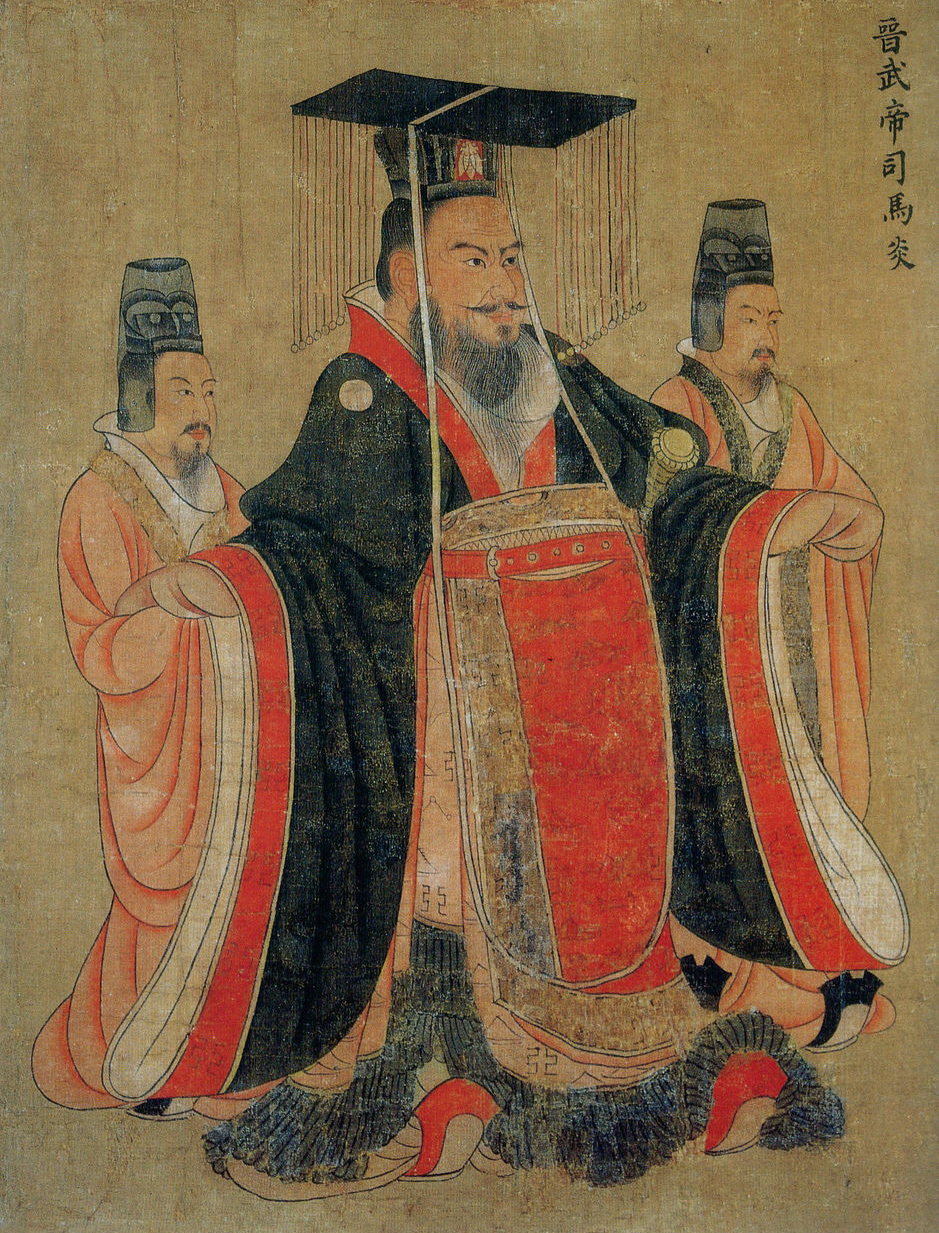
Snapshot: Sima Yan, aka Emperor Wu of the Jin


Sima Yan, conqueror of the Cao clan (晉滅吳之戰), enjoyer of 10,000 concubines.
Read more...

Friday, May 8, 2009

Analytical Reading: The Need to Explain

Analytical Reading

Zhao, A Theory of Auto/biography

Chapter 5, section 1. Three basic tropes of the New Biography,Trope 2:

The Need to Explain 務必解釋.

Not just to explain, but to make your audience see things differently. Strachey, for example, was an iconoclast who wants us to see that so-called great figures of the Victorian age were actually depraved by their religious superstition. He pushes for detailed explanations of this depravity 野心; Florence Nightingale, for example, is consumed by [her own?] demons 惡魔繩身 [is this a psychological explanation? At times like this, Zhao's idiomatic language is a little too pat -- too terse].

Ludwig may not be quite as iconoclast, but he's even more meticulous 縝密 about explaining. Why was Napoleon successful in invading Italy, for example? His age, his army, his appeal to Italians for values like "freedom." He waged two wars: one with the gun, one with the pen. [Does Prof. Zhao realize this explanation is likely to be completely outdated?]

Napoleon was a very active man, and he was also a master of language. Speech at Milan. You are the suns of Great and Good men of the Past. This explanation is a creation of Ludwig. [I take it Zhao is emphasizing the 'constructedness' of the biographical subject at hand here. He goes on to reflect on a basic technique used in biographical explanation: comparison of the biographical subject with his actualizing other.

First he characterizes Strachey and Ludwig in comparison: Strachey is straight and direct where Ludwig is meandering. Yet, both were good at explaining via binary comparison 二元對立 [Zhao is himself applying just such binary comparison to begin this discussion. Is that a conscious testament to the validity, or just basic existence, of this form of argument?

Ludwig compared Goethe and Schiller; Bradford, Lee and Grant. This sort of nemesis comparison reaches its extreme in Maurois, who pitched Disraeli against Gladstone, called Inferno and Paradiso, respectively in Disraeli.
趙白生
Strachey
Ludwig
Ludwig
Bradford
Maurois

In a particularly fantastic passage, Prof. Zhao summarizes his conception of biographical technique that connects the artistry of comparison with the need to explain: it asks scholars to find hidden gold, and instructs in how to make the gold. "Art captures the ever-elusive Explanation," says Strachey. This is an example of Foucault's "effective history" 有效史. "Effective history (i.e. an approach to history in which there is consciousness of the myriad effects that history has) uproots the traditional foundations of the self." Stop! That's a quote from some other student's notes, but I can make sense of it here if I imagine Ludwig's, Bradford's, Maurois's, and Strachey's concept of historical truth. Why, for example, did Napoleon succeed in Italy? He would not have if he were not a good speech writer, for one thing. This shows the effect of being good with words. How is that an uprooting of the traditional foundations of the self? I suppose because it highlights not only a man's character but also a man's circumstances as the main factor determining whether he win a war or become a more famous poet. If indeed the machinations of other men are to blame, or if Italian's were simply ripe for democratic rhetoric, then what to say of Napoleon's self, except that he adapted to circumstance well? Rather than say that Napoleon won, we end up feeling that Napoleon played a good game, and the stakes were in his favor.

No matter how much we study a famous political figure, or artist, we still don't know whether his original, deepest character is good or bad. In fact, come to think of it, it is most likely neither good nor bad, but something of the character of a machine, one that wins, and then loses, perhaps to win again. Analysis of the technique of autobiography reveals just how constructed the explanations are. We step out of the suspended disbelief of the nonfiction, and read it as fiction. The virtual world with complete sensory perception becomes a sequence of static images again, not even a moving film. Slowed down, it is more like manga, comics, multiple portraits with some dialogue drawn in. One panel follows after another. There is a plot there, but it is not the true history, just the story the storytellers tell, and we are the story tellers.

is properly under “dissociative, directed against identity” (93) corresponding to specific attitudes and interests. genealogy: The goal is not to trace the evolution of a concept, but to "isolate the different scenes where they engage in different roles" (76). They make the gold they want. 風骨存也 -- Liu Xie. [THat's an issue to take seriously!]
Read more...

Thursday, May 7, 2009

Snapshot of the Academy: Han Zhaoqi 韩兆琦


If memory serves (and it may well not), this is the guy that Professors Wu Pei-yi and Wendy Larson credit with pointing out the novel-like craftsmanship of Sima Qian's biographies [Update: nope, I was wrong about Larson, she credits the evidently similar scholarship of Li Changzhi and Zhou Hulin. More to come). Prof. Zhao quotes at length on this crafting with the goal of conveying the personality of the biographical subject. (Zhao uses his A History of Chinese Biography 《中国传记文学 史》)

Professor Han (looking far younger than his 70+ years, btw) can be seen here giving a 30-minute lecture on Sima Qian's biography of the first Han emperor.

It's interesting to me that Professor Han is so devoted to a single (albeit enormous) text -- this really shows the great status that Sima Qian retains in contemporary culture. Dubbed the Expert on Sima Qian's Historical Records (“中国《史记》研究大家”), Han's works include:

Notes on the Historical Records《史记笺证》
Essays on the Historical Records《史记通论》
Selected Criticism on the Historical Records《史记题评》
Essays on Commentaries to the Historical Records《史记选注集说》
A Glossary to the Commentaries to the Historical Records《史记选注汇评》
Critical Essays on the Historical Records《史记评议赏析》
The World of the Historical Records《史记博议》
The Historical Records: An Annotated Reader 《史记新译读本》

Cool, huh? For my purposes though, it will perhaps be more important to consult his History of Chinese Biography, The Art of Chinese Biography
《中国传记艺术》, and 《汉代散文史》History of the Essay in the Han Dynasty.
Read more...

Biography Theory at a Glance (8/9)

Cockshut, A. O. J. Truth to Life; the Art of Biography in the Nineteenth Century. London, Collins, 1974.

Reviewed with great esteem by somebody named JMS Tomkins. The issue of a psychological truth comes up, which is an intriguing indicatino of the depth of Cockshut's consideration.

No assumption is left lying unexamined; it is matched against facts and questioned as to its logical consequences. Defending Southey's emblematic interpretation of the providential deliverance from the fire of John Wesley in his childhood, against the modern expectation that the incident will be accepted as formative of his mind, he points out the grave intellectual difficulties that such an acceptance brings in its train.

The lesson: never turn away from intellectual difficulty. Anon!

Southey's biography of John Wesley is available for free download from Google Books; the anecdote in question is from near the beginning of the book.


Saved from the Flames

John, his second son, the founder of the Methodists, was born at Epworth on the 17th of June 1703. Epworth is a market-town in the Lindsay division of Lincolnshire, irregularly built, and containing at that time in its parish about two thousand persons. The inhabitants are chiefly employed in the culture and preparation of hemp and flax, in spinning these articles, and in the manufactory of sacking and bagging. Mr. Wesley found his parishioners in a profligate state; and the zeal with which he discharged his duty in admonishing them of their sins, excited a spirit of diabolical hatred in those whom it failed to reclaim. Some of these wretches twice attempted to set his house on fire, without success: they succeeded in a third attempt. At midnight some pieces of burning wood fell from the roof upon the bed in which one of the children lay, and burnt her feet. Before she could give the alarm, Mr. Wesley was roused by a cry of fire from the street: little imagining that it was in his own house, he opened the door, and found it full of smoke, and that the roof was already burnt through. His wife being ill at the time, slept apart from him, and in a separate room. Bidding her and the two eldest girls rise and shift for their lives, he burst open the nursery door, where the maid was sleeping with five children. She snatched up the youngest, and bade the others follow her; the three elder did so, but John, who was then six years old, was not awakened by all this, and in the alarm and confusion he was forgotten. By the time they reached the hall, the flames had spread every where around them, and Mr. Wesley then found that the keys of the house-door were above stairs. He ran and recovered them, a minute before the stair-case took fire. When the door was opened, a strong north-east wind drove in the flames with such violence from the side of the house, that it was impossible to stand against them. Some of the children got through the windows, and others through a little door into the garden. Mrs. Wesley could not reach the garden door, and^ was not in a condition to climb to the windows : after three times attempting to face the flames, and shrinking as often from their force, she besought Christ to preserve her, if it was his will, from that dreadful death : she then, to use her own expression, waded through the fire, and escaped into the street naked as she was, with some slight scorching of the hands and face. At this time John, who had not been remembered till that moment, was heard crying in the nursery. The father ran to the stairs, but they were so nearly consumed, that they could not bear his weight, and being utterly in despair, he fell upon his knees in the hall, and in agony commended the soul of the child to God. John had been awakened by the light, and thinking it was day, called to the maid to take him up ; but as no one answered, he opened the curtains, and saw streaks of fire upon the top of the room. He ran to the door, and finding it impossible to escape that way, climbed upon a chest which stood near the window, and he was then seen from the yard. There was no time for procuring a ladder, but it was happily a low house: one man was hoisted upon the shoulders of another, and could then reach the window, so as to take him out: a moment later and it would have been too late : the whole roof fell in, and had it not fallen inward, they must all have been crushed together. When the child was carried out to the house where his parents were, the father cried out, " Come, neighbours, let us kneel down: let us give thanks to God ! he has given me all my eight children : let the house go, I am rich enough." John Wesley remembered this providential deliverance through life with the deepest gratitude. In reference to it he had a house in flames engraved as an emblem under one of his portraits, with these words for the motto, '' Is not this a brand plucked out of the burning ?"

Read more...

Biography Theory at a Glance (7/9)

Kendall, Paul Murray. The Art of Biography. New York, Norton, 1965.

Stephen Shapiro says the baseball player can't always coach; he has no taste for Kendall's model of biography as "simulation." "Clifford's pluralistic approach is much more sensible and sound than Kendalls prescriptive one." Another fun, instructive negative review.

Murray is best known for his biography of Richard III -- hence the baseball player analogy.

Read more...

Analytical Reading: Biographical Fact

Zhao Baisheng, A Theory of Auto/biography

Chapter 1, Section 1 Biographical Fact 傳記事實

Biographical facts are all the elements within anecdotes that reveal something of the personality of the biographical subject, affirms Professor Zhao. For Plutarch and Sima Qian alike, biography is a craft of carefully chosen anecdotes. Alcibiades bites a man and says he is no woman, but a lion: the lion is memorable because it is a good figure by which to receive the general character of Alcibiades. Alcibiades has a beautiful dog, and one day he cuts off its tail. Again, the dog has the ability to sub-in for Alcibiades.

The main point here is that biography is not simply a large accumulation of materials, distinguished only by their veracity. Liang Qichao thought this was so, but as we can see in his biographies of Confucius and Guan Zhong, there is no personality there, because he did not craft one. Personality was not at the center of his attention, as it should have been. But what exactly is a "personality"? This remains a slippery term for Prof. Zhao. Also of concern: what sorts of personalities are most worth preserving? Does Zhao relate at all to Prof. Thayer's concern that "mokes" might be as interesting as heroes? I like the case of Alcibiades, because it indicates that this might be so.

"He was once hard pressed in wrestling, and to save himself from getting a fall, set his teeth in his opponent's arms, where they clutched him, and was like to have bitten through them. His adversary, letting go his hold, cried: "You bite, Alcibiades, as women do!"

"Not I," said Alcibiades, "but as lions do."
Read more...

Wednesday, May 6, 2009

Biography Theory at a Glance (6/9)


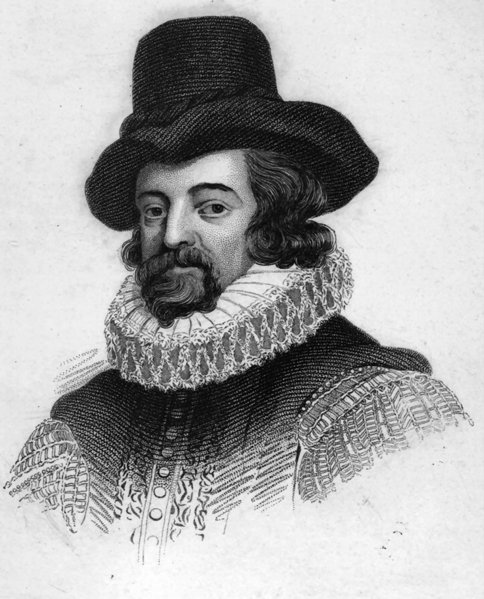
Apparently Bacon was afraid he'd lose himself

Clifford, James L.. Biography as an Art; Selected Criticism, 1560-1960. New York, Oxford University Press, 1962.

An anthology of crucial importance; no wonder Prof. Zhao mentions it again and again. Reviewer S.C. Roberts: "His collection ranges from Bacon and Fuller and other seventeenth-century writers through the two following centuries to a veritable galaxy of contemporary critics; and his wide reading is further demonstrated by a selective, but lengthy, list of modern books and essays which contain relevant critical matter."
Read more...

Biography Theory at a Glance (5/9)

Longaker, John Mark. Contemporary Biography. Philadelphia: University of Pennsylvania Press, 1934.

In a fun, short negative review, Howard Mumford Jones calls this "pleasant, though greatly over-written." Jones wants stronger criticism of bad biographers (like Emile Ludwig), and deeper consideration of the many issues of form, like "Guedalla 's bright style, Strachey's insight and compression, Bradford 's unitarian sketch, and so on."
Philip Guedalla by Anastas Botzaritch Sava (at Bailliol College, Oxford)
Read more...

Biography Theory at a Glance (4/9)

Portrait of the French Artist As British Scholar

Maurois, André. Aspects of Biography. New York, Ungar, 1966 [1929].

Statement from the French WWI vet turned anglophile and popular lecturer in the English-speaking world. He wrote biographies of Disraeli, Byron, Shelley, and many others, including some for children; his Call No Man Happy: An Autobiography dates from 1944. Quotable: "Memory is a great artist. For every man and for every woman it makes the recollection of his or her life a work of art and an unfaithful record."
Read more...

Terms and topics

About Me

My photo
We are all wanderers along the way.